

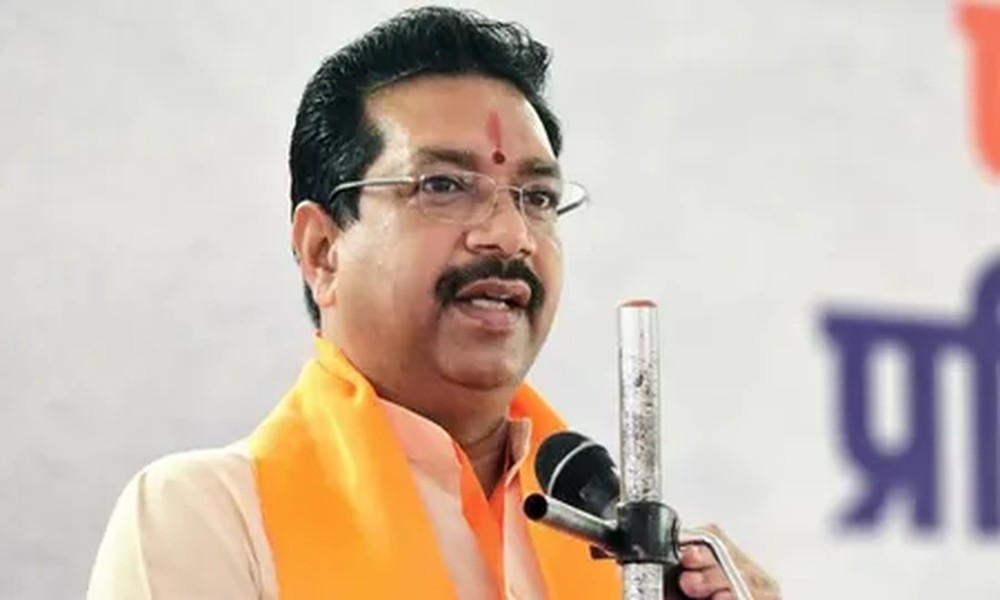
The Bharatiya Janata Party’s decision to assign Rajasthan’s organisational responsibility to Ajaey Kumar BJP is being seen as a significant move aimed at strengthening the party’s internal structure in one of India’s most politically important states. The appointment has generated interest not only because Rajasthan holds major electoral value, but also because Ajaey Kumar comes with the experience of having played a key role in shaping the BJP’s disciplined and active organisational framework in Uttarakhand.
Within BJP circles, the move is being interpreted as a reward for performance. Ajaey Kumar’s tenure in Uttarakhand is widely regarded as a period during which the party organisation remained stable, energetic and well-connected with the grassroots. The central leadership’s decision suggests that his work in the hill state was closely observed and appreciated at the national level. By giving him Rajasthan’s responsibility, the party has signalled that proven organisational ability remains one of the most valued qualities in its internal system.
Rajasthan is a state where organisational strength can directly influence political outcomes. The state has a large geographical spread, diverse regional identities, complex social equations and an intense political environment. In such a setting, a party cannot rely only on leadership faces or election-time messaging. It needs a strong cadre, active booth committees, regular communication and coordination between the government, party leaders and workers. Ajaey Kumar’s experience in building such systems in Uttarakhand is likely to be central to his new role.
In Uttarakhand, Ajaey Kumar worked in a state with very different but equally demanding challenges. The geography of Uttarakhand makes political organisation difficult. Many areas are remote, travel is time-consuming and the population is spread across hill districts, valleys, border regions and urban centres. Keeping workers active in such conditions requires more than formal instructions from the top. It requires personal contact, regular field visits, local understanding and a disciplined follow-up system. Ajaey Kumar’s organisational style placed emphasis on these elements.
One of the most important features of his tenure was the focus on booth-level activity. The BJP has long treated the booth as the foundation of electoral success, and in Uttarakhand this approach was strengthened through structured programmes and continuous worker engagement. Booth committees, mandal units and district teams were encouraged to remain active beyond election periods. This ensured that the organisation was not suddenly awakened during elections but remained in a state of preparedness throughout the year.
Ajaey Kumar also focused on worker training and communication. Political workers often need clarity about the party’s programmes, government schemes, campaign goals and ideological messaging. In Uttarakhand, training sessions, organisational meetings and outreach programmes helped workers remain connected with the party’s larger objectives. This regular engagement created a sense of purpose among the cadre and reduced the possibility of organisational drift.
Another factor that worked in his favour was the smooth functioning of the organisation despite changes in political leadership. Uttarakhand witnessed changes at the top, including in the offices of the chief minister and the state president. Such changes can sometimes disturb the internal rhythm of a party organisation. However, during Ajaey Kumar’s tenure, the BJP structure in the state continued to function with discipline. The organisation did not appear to lose direction, and workers remained engaged with regular programmes.
This ability to maintain continuity in times of change is one of the reasons his appointment to Rajasthan is being viewed as significant. Rajasthan too is a state where multiple power centres, regional aspirations and leadership expectations must be handled carefully. An organisation minister in such a state must not only plan programmes but also ensure coordination among leaders, workers and various units of the party. Ajaey Kumar’s experience in maintaining discipline and communication in Uttarakhand may prove valuable in this larger political environment.
Party insiders believe that the central leadership was also impressed by the coordination between the Uttarakhand government and the BJP organisation during his tenure. For a ruling party, this coordination is essential. Government schemes and decisions need to reach the public through the organisation, while feedback from the ground must also travel back to the leadership. Ajaey Kumar helped keep this two-way communication active. Workers were not left disconnected from governance, and the organisation remained a bridge between the government and society.
His working style is often described as quiet, systematic and focused on results. Rather than seeking public attention, he has been seen as someone who works through organisational channels. This style is highly valued in the BJP’s internal culture, where organisation ministers often operate away from the spotlight but play a decisive role in shaping political outcomes.
Their strength lies in building systems, energising workers and ensuring that party programmes are implemented effectively.
The Rajasthan assignment is also a message to party workers in Uttarakhand. It indicates that the organisational work done in the state has received national recognition. For a relatively smaller state, having one of its key organisation figures moved to a larger political battleground is a matter of pride. It shows that successful models developed in smaller states can be noticed and applied in bigger political contexts.
However, Rajasthan will not be an easy assignment. The state’s political landscape is far more expansive. It has different regions with distinct political behaviour, strong local leaders,
caste-based equations and high expectations from party workers. Managing such a complex organisation will require patience, balance and strategic clarity. Ajaey Kumar will need to build trust across units, energise the cadre and ensure that the party’s organisational machinery remains active at every level.
The BJP’s decision reflects its belief that election victories are built long before polling day. They are built through booth meetings, worker training, disciplined communication, local outreach and continuous coordination. Ajaey Kumar’s record in Uttarakhand aligns with this belief. His new responsibility in Rajasthan will be to translate that experience into a larger and more complex political landscape.
In the final analysis, Ajaey Kumar’s appointment is not just a transfer from one state to another. It is a statement of confidence by the BJP’s national leadership. It recognises his ability to strengthen an organisation, maintain discipline and deliver results in challenging conditions. As he takes charge in Rajasthan, all eyes will be on how he adapts the organisational lessons of Uttarakhand to one of the BJP’s most important political states.
